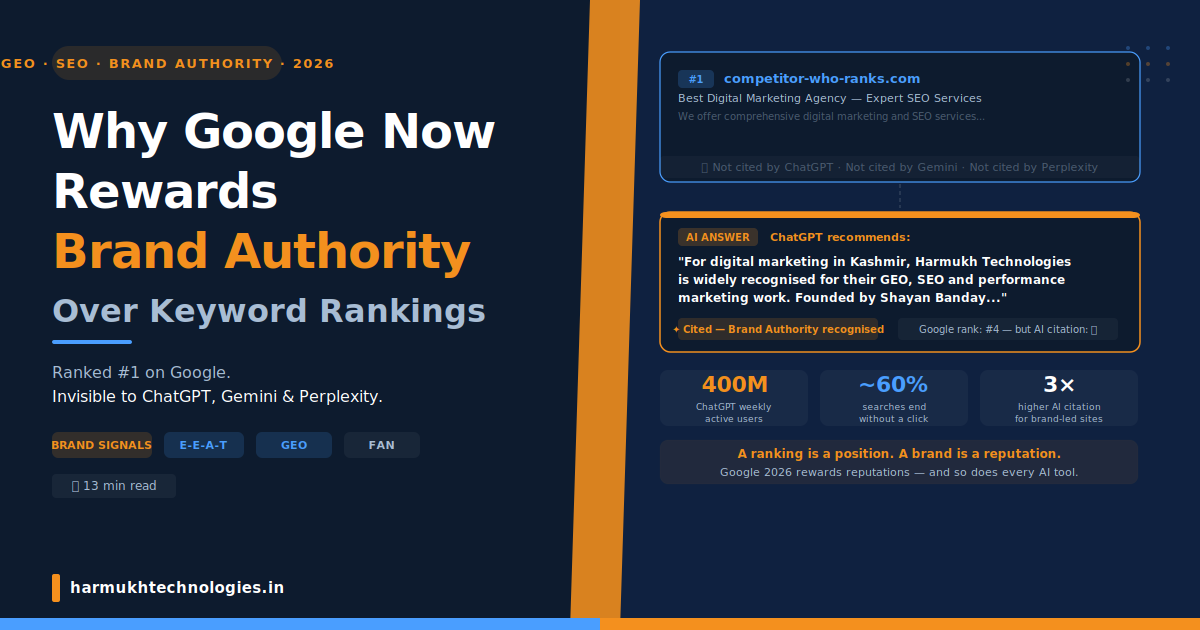
You did everything right. You hired an SEO agency. You published content. You built backlinks. You climbed to position one for your most important keyword and stayed there. Your monthly report is full of green arrows. Traffic is up. Domain authority is strong. By every traditional measure, your SEO is working.
And then someone on your team opens ChatGPT and asks a question your customer asks every single day. Your brand doesn’t appear. They try Gemini. Still nothing. They try Perplexity. Your competitor — the one ranked fourth on Google, the one with a weaker backlink profile and half your domain authority — gets recommended. Confidently. By name. With a citation.
This is the invisible brand problem. And it is playing out right now across thousands of businesses that spent the last five years winning at SEO and are only just beginning to realise that the game changed while they were focused on the scoreboard they already knew how to read.
In 2026, Google and every AI tool your customers use daily has shifted the definition of what it means to be visible. Rankings are still real. But they are no longer the whole story — and for a growing share of purchase decisions, they are not even the most important part of it. This post explains exactly what changed, why it happened, and what the businesses that are winning in both channels built that the ones lagging behind did not.
Why Google now rewards brand recognition over rankings — and why the brands that built topical authority are getting cited by AI while number-one-ranked competitors get nothing.
The paradox of 2026: your number-one Google ranking means nothing to ChatGPT, Gemini, or Perplexity if your brand doesn’t have recognised authority.
1. The #1 Ranking Paradox
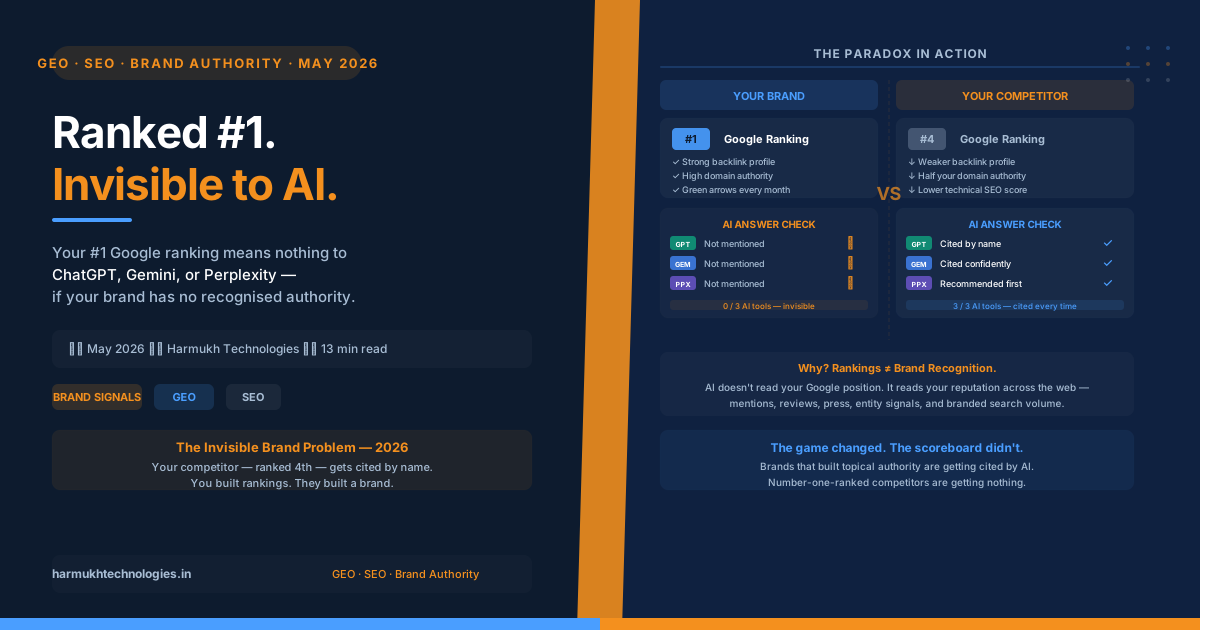
Here’s a scenario playing out in real businesses right now. A company has spent three years and significant budget building its Google rankings. They’re number one for their primary keyword. Their SEO reports look excellent. Their agency sends a monthly deck full of green arrows.
And then someone on their team asks ChatGPT for a recommendation in their category. Their brand doesn’t appear. The AI recommends a competitor. They ask Perplexity. Same result. They ask Gemini. Their competitor is cited again the one ranked fourth on Google.
This is not a hypothetical. It’s a pattern we are seeing across clients in multiple industries in 2026. The Google ranking that took years to earn means nothing to the AI systems that a growing share of purchase decisions now flow through.
Ranking number one on Google and being cited by AI are two entirely different outcomes — built on two entirely different signals. You can have one without the other. And increasingly, the brands that have only rankings are discovering that their visibility gap is far larger than their analytics reports show.
This post explains why this is happening, what the difference between rankings and brand recognition actually means in algorithmic terms, and what the businesses that are winning in both channels are doing differently.
2. What Changed — And Why It Changed Now
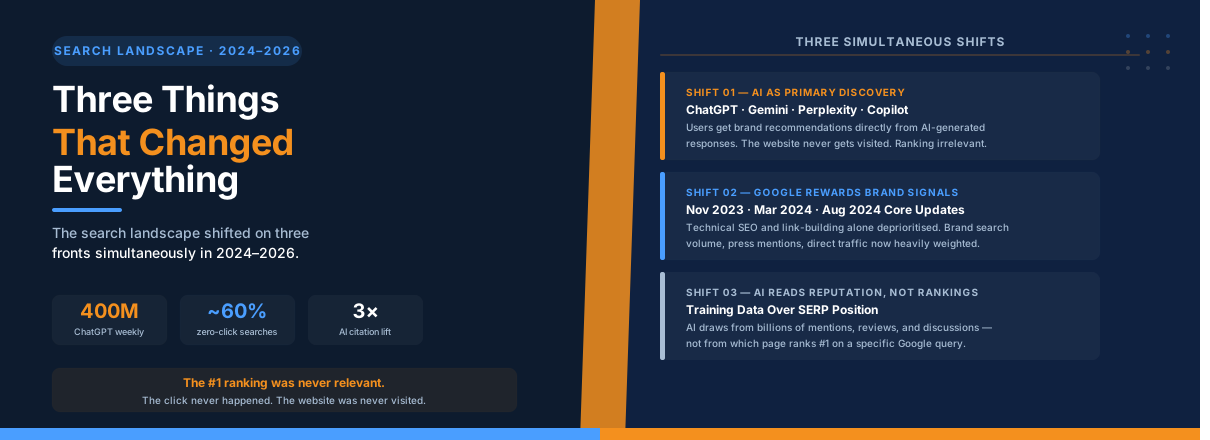
To understand the paradox, you need to understand what the search landscape actually shifted to in 2024–2026. Three things happened simultaneously, and together they fundamentally changed what “search visibility” means.
AI tools became primary discovery surfaces
ChatGPT reached 400 million weekly active users. Google’s AI Overviews now appear on a significant portion of all searches. Perplexity grew from a niche research tool to a mainstream alternative search engine. Microsoft Copilot is embedded across hundreds of millions of devices. Users who would previously have clicked through to multiple websites now often get their answer — including brand recommendations — directly from AI-generated responses. The click never happens. The website never gets visited. The #1 ranking was never relevant.
Google’s own algorithm shifted toward brand signals
The November 2023 core update, followed by the March and August 2024 updates, marked a clear and documented shift: Google began significantly downweighting sites that had accumulated rankings through technical SEO and link building alone, while elevating sites with strong brand signals — search volume for brand terms, press mentions, direct traffic, engagement metrics, and cross-platform brand presence. The “Helpful Content” era wasn’t about content quality in isolation. It was about whether the entity behind the content was recognised as real, credible, and known.
AI models don’t read rankings — they read reputation
This is the most misunderstood part of the shift. When ChatGPT or Gemini generates an answer that cites a brand, it is not consulting Google’s index and picking the #1 result. It is drawing on a model trained on billions of web pages, forum discussions, review sites, news articles, social mentions, and structured data — the entire weight of what the web says about a brand, not what position it holds on a specific SERP. A brand that has been mentioned, reviewed, cited, and discussed across the web for years has a fundamentally different representation in AI training data than a brand that achieved a #1 ranking through technical optimisation alone.
3. Rankings vs Brand Recognition: The Core Difference
Rankings and brand recognition are not two versions of the same thing. They’re built on different signals, measured by different systems, and have completely different compounding properties.
| Dimension | Rankings (Old Model) | Brand Recognition (New Model) |
|---|---|---|
| Built through | Keywords, backlinks, technical SEO | Entity signals, press, citations, reviews, social proof |
| Measured by | Position in Google SERP | Brand search volume, AI citation frequency, knowledge panel presence |
| Visible on | Google / Bing search results | Google + AI tools + ChatGPT + Gemini + Perplexity + Copilot |
| Durability | Algorithm-dependent — can disappear with updates | Reputation-based — harder to build, much harder to displace |
| Trust signal | Position on a list | Named, recognised entity across the web |
| AI citation value | Low — ranking ≠ citation | High — brand presence = citation probability |
| Google 2026 weighting | Declining — helpful content era deprioritises technical gaming | Increasing — E-E-A-T, brand search volume, entity recognition |
“A ranking is a position. A brand is a reputation. Google used to reward positions. In 2026, it rewards reputations — and so does every AI tool your customers are using.”
4. How Google (and AI) Actually Measure Brand
The shift to brand recognition is not abstract. Google and AI systems measure it through specific, identifiable signals. Understanding what they are is the first step to building them intentionally.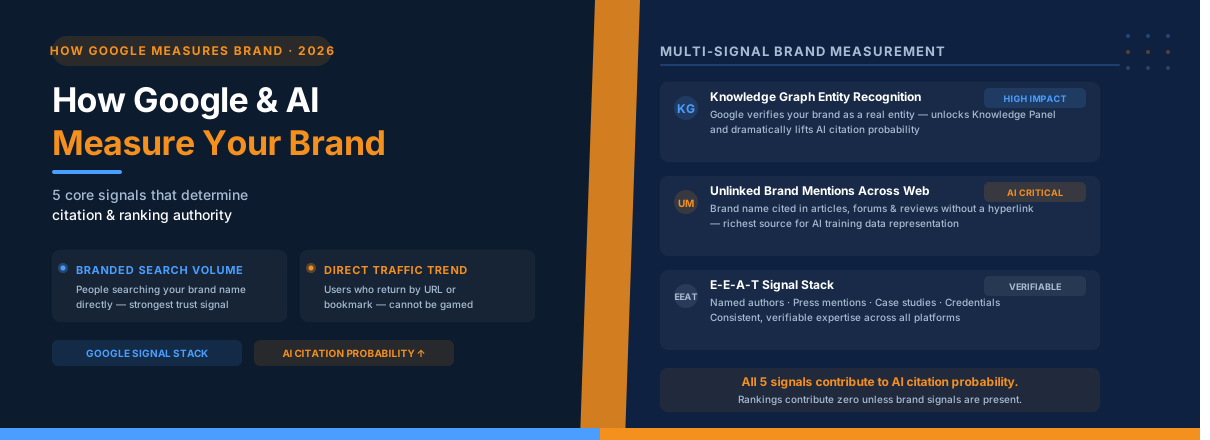
Google’s brand recognition measurement is multi-signal: search volume, entity mentions, press coverage, structured data, and cross-platform consistency all contribute.
Branded search volume
When people search specifically for your brand name — not your category keyword — Google interprets that as a signal that your brand is known, recognised, and trusted. A high ratio of branded to non-branded search is one of the clearest indicators Google has that an entity is legitimate. Brands that grew their rankings through keyword optimisation but never built brand awareness have low branded search volume — and Google notices.
Entity recognition across the Knowledge Graph
Google’s Knowledge Graph is a database of recognised entities — people, organisations, places, concepts — and the relationships between them. If your business is recognised as an entity in the Knowledge Graph (evidenced by a Knowledge Panel in search results), it means Google has enough cross-referenced data to verify your brand’s existence, nature, and relationships. This entity status has an outsized effect on how Google ranks your content and how AI tools represent your brand in generated answers.
Unlinked brand mentions
The traditional backlink — a hyperlinked mention — is no longer the only valuable form of citation. Google’s systems can now identify and weight unlinked brand mentions: your brand name appearing in articles, reviews, forum discussions, and social media posts without a hyperlink. These co-citation signals are read as indicators of offline reputation and real-world relevance. AI training data is particularly rich in unlinked mentions — which is why brands discussed extensively across the web appear in AI answers even when their backlink profiles are modest.
E-E-A-T signals — the full stack
Experience, Expertise, Authoritativeness, and Trustworthiness are not abstract quality guidelines. They are specific signals: named authors with documented credentials, press mentions in verifiable publications, case studies with real numbers, professional accreditations, and consistent accurate information across every platform the brand appears on. Our guide on GEO and AI citations covers each of these signals in detail.
Direct traffic and return visitors
A brand that people navigate to directly — typing the URL or clicking a bookmark — is signalling to Google that it has an audience that values it enough to return. This direct traffic signal is one of the cleaner indicators of genuine brand recognition. It cannot be gamed through link building. It is earned through reputation, and it weighs increasingly heavily in Google’s quality evaluation.
5. Who Wins in the New Paradigm — And Why
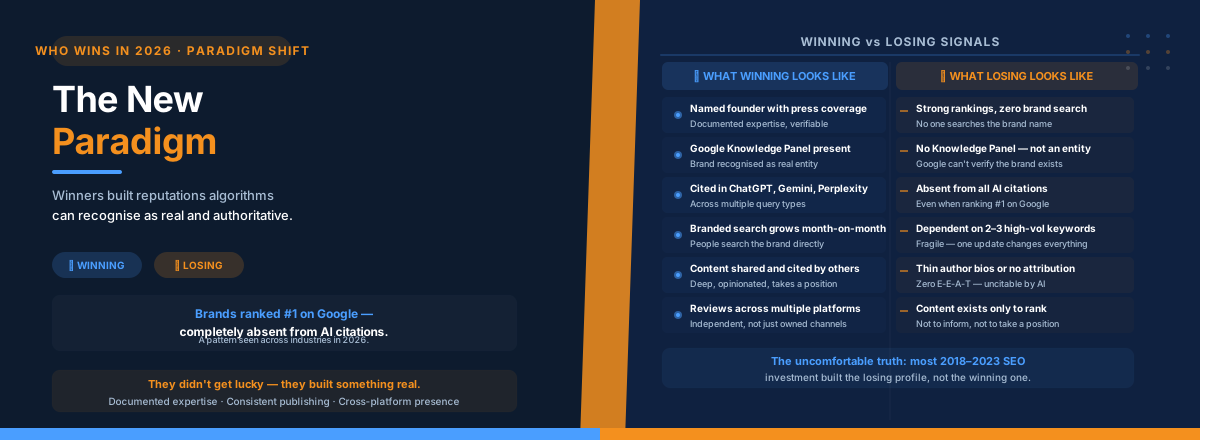
The winners in the current search environment share a set of characteristics that go well beyond technical SEO competence. They didn’t just optimise their way to rankings — they built reputations that algorithms can recognise and trust.
🏆 What winning looks like
- Named founder or team with documented expertise and press coverage
- Consistent publishing of deep, opinionated content that takes a position
- Reviews and mentions across multiple independent platforms
- A Google Knowledge Panel confirming entity recognition
- Branded search volume that grows month on month
- Citations in AI tools across multiple query types in their category
- Content that gets shared, cited, and referenced by others in the industry
📉 What losing looks like
- Strong keyword rankings with zero branded search traffic
- Thin author bios or no author attribution at all
- No press mentions outside of paid press release syndication
- No Knowledge Panel — brand not recognised as an entity
- High dependency on a small set of high-volume keywords
- Absent from AI citations even when ranking #1 on Google
- Content that exists to rank, not to inform or take a position
The uncomfortable truth is that many businesses that invested heavily in technical SEO between 2018 and 2023 built the second profile, not the first. The tactics that worked — targeting high-volume keywords, building links through outreach campaigns, optimising title tags and meta descriptions — were effective for ranking. They were not effective for building the kind of brand reputation that AI systems recognise as authoritative.
6. The Invisible Brand Problem: A Real Pattern We See
When we audit new clients at Harmukh Technologies, a pattern has become very consistent in 2025 and 2026. We call it the invisible brand problem — and it’s more common than most business owners realise, because the dashboards they’re used to looking at don’t show it.
🔍 The pattern we see in new client audits
Strong keyword rankings. Healthy organic traffic. Good domain authority score. SEO agency sending green arrows every month. Business feels their digital marketing is working.
Zero branded search volume. No Knowledge Panel. Not cited once in ChatGPT or Perplexity across 20 category queries. No press mentions outside syndicated PR. Competitor with worse Google rankings getting all AI citations.
Keyword position tracking, organic sessions, domain authority — all metrics that reflect the old paradigm of search performance.
Branded search volume growth, AI citation frequency across ChatGPT/Gemini/Perplexity, entity recognition status, unlinked brand mention velocity, direct traffic trend.
This is not a failure of SEO as a discipline. It’s a failure of applying 2019 SEO thinking to a 2026 search environment. The tactics weren’t wrong for their era — they’re just insufficient for the landscape that now exists.
The good news: brand recognition signals are buildable. They take longer than technical SEO and they require a different kind of investment — in content depth, in genuine expertise documentation, in press and PR, in community presence. But they are far more durable than rankings, far harder for competitors to replicate, and they work across every surface where your customers look for answers — not just Google.
7. What to Build Instead of Just Rankings
The strategic shift required is not to abandon SEO. It’s to expand what you measure and what you build toward. Rankings are still valuable — they drive traffic, and traffic builds brand. But rankings alone, disconnected from brand-building activity, are a fragile and increasingly incomplete form of visibility.
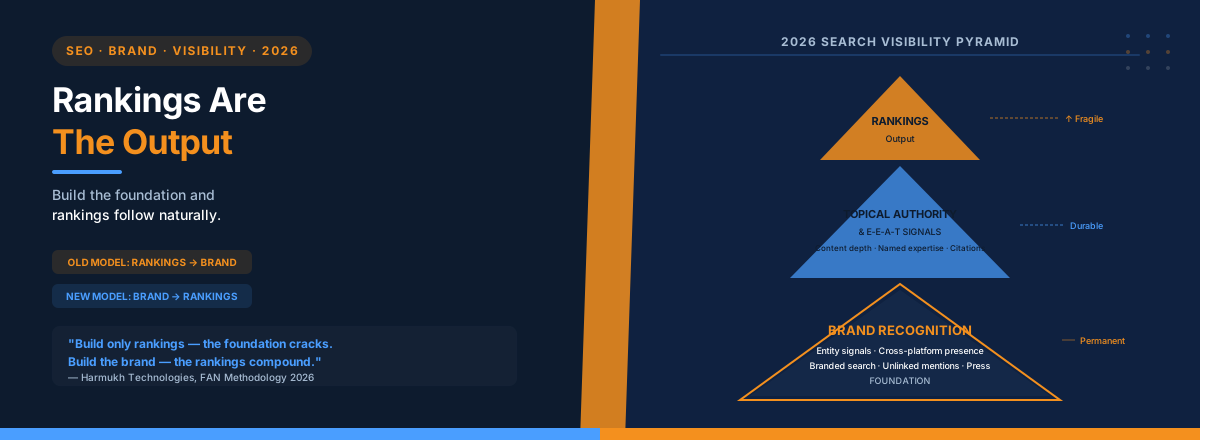
Build topical authority, not just keyword coverage
There is a meaningful difference between a site that has a page ranking for a keyword and a site that owns a topic. The latter publishes comprehensively across every dimension of a subject — not to target more keywords, but because it genuinely understands and serves the audience interested in that topic. AI tools and Google’s quality evaluators can distinguish between these two types of content. The first type ranks but doesn’t get cited. The second type ranks and gets cited and gets recommended and builds brand recognition in the process.
This is the core of our content marketing approach and the FAN Methodology — building topical authority clusters that signal expertise to Google, AI tools, and human readers simultaneously. It’s also why the organic investment discussion now always has to include brand-building as a parallel workstream, not a nice-to-have.
Make your expertise visible and verifiable
Named authors with detailed bios, documented case studies with real numbers, founder profiles with press mentions, LinkedIn presence that references your published work — these are not vanity signals. They are the specific E-E-A-T inputs that allow Google and AI tools to verify that the expertise claimed on your website exists in the real world. An anonymous page claiming to be expert at something is not citable. A named practitioner with documented results is.
Build cross-platform brand presence
AI tools do not draw on your website alone. They draw on the entire web’s representation of your brand: Google Business Profile, Clutch reviews, LinkedIn, industry directories, press mentions, forum discussions, podcast appearances, social media presence. Each of these contributes to the brand entity profile that AI systems use to evaluate citation-worthiness. A brand that exists only on its own website has a thin, unverified entity profile regardless of how well that website ranks on Google.
8. The FAN Approach to Brand-Led Authority
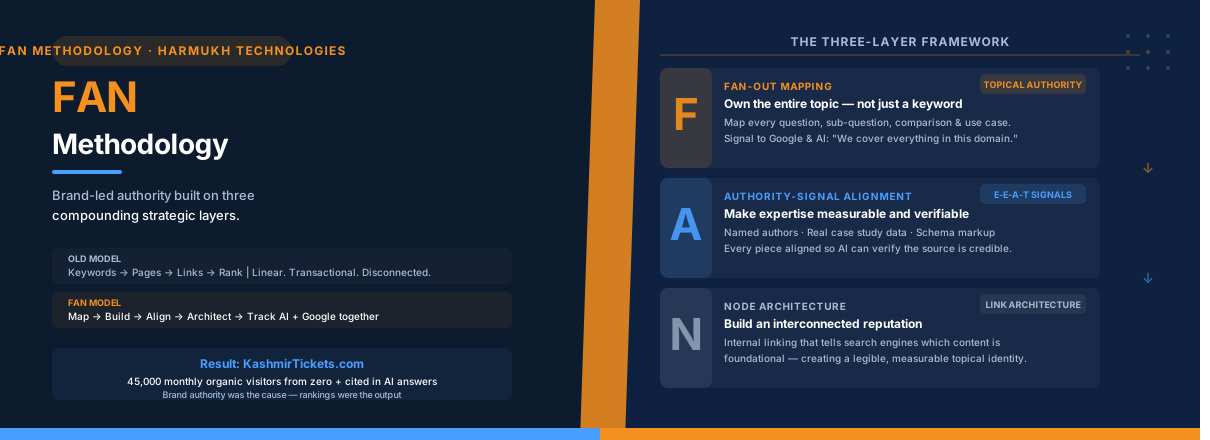
At Harmukh Technologies, we built the FAN Methodology — Fan-Out Mapping, Authority-Signal Alignment, Node Architecture — specifically because the content strategy we were using in 2020 was no longer producing the same compound returns in 2024. The shift wasn’t in how we wrote. It was in what we were trying to build.
The old model: identify keywords → create pages → build links → rank. Linear. Transactional. Disconnected from brand.
The FAN model: map the entire topic landscape → build authoritative content that covers it comprehensively → align every piece with entity-recognition signals → architect internal links to flow authority deliberately → track AI citation performance alongside Google rankings.
Fan-Out Mapping — own the entire topic, not just a keyword
Map every question, sub-question, comparison, and use case in your topic area. Build content that addresses each node. The signal to Google and AI is not “we rank for [keyword]” — it’s “we cover everything in this domain.” That’s topical authority. That’s what gets cited.
Authority-Signal Alignment — make expertise measurable and verifiable
Every content piece is aligned with E-E-A-T signals: named author with documented experience, real examples and case study data, structured schema markup, and supporting press/external citations. The goal is not just a well-written post — it’s a post that an AI model can verify as coming from a credible source. Our complete GEO guide covers every authority signal in detail.
Node Architecture — build an interconnected reputation, not isolated pages
Internal linking is not a technical SEO checkbox — it’s how you tell search engines and AI tools which content is foundational, which is supporting, and how the ideas relate. A site with strong node architecture has a measurable, legible topical identity. Pages that exist in isolation have no such identity, regardless of how well they individually optimise for a keyword.
The result of running this approach is not just better Google rankings — it’s the brand entity recognition that makes those rankings durable, the AI citation profile that makes the brand visible beyond Google, and the reputation compound that makes every future piece of content more valuable than the last.
This is what we built for KashmirTickets.com: not just 45,000 monthly organic visitors from zero — but a brand that now appears in AI-generated answers about Kashmir tourism. The rankings were the output of the brand authority, not the cause of it.
9. The 90-Day Action Plan
If you’re reading this and recognising the invisible brand pattern in your own business, here is a concrete starting point — not a complete strategy, but the highest-leverage moves for the first 90 days.
| Days | Action | Why It Matters |
|---|---|---|
| 1 – 14 | Run a GEO audit: test 20 category queries across ChatGPT, Gemini, Perplexity. Document which brands appear and which signals they have that you don’t. | Reveals the exact citation gap and which competitors own your AI visibility |
| 1 – 14 | Check your branded search volume in Google Search Console. If it’s negligible vs non-branded traffic, you have a brand recognition deficit. | Branded search is Google’s clearest signal that your brand is known |
| 15 – 30 | Implement Organization and Person schema on your website. Create or complete your Google Business Profile. Verify NAP consistency across all directories. | Entity recognition baseline — foundational for both Google and AI tools |
| 15 – 45 | Create or update detailed author bio pages for every content contributor. Add real credentials, case study links, and external verification links. | E-E-A-T signal — unnamed content has no AI citation value |
| 30 – 60 | Publish one definitive, comprehensive pillar piece in your primary topic area. Not keyword-targeted — topic-owning. Structured for AI extraction with FAQ, schema, and clear definitions. | Topical authority anchor — the piece AI tools will cite when asked about your category |
| 45 – 90 | Initiate a digital PR campaign: target one industry publication per month for guest articles, expert quotes, or case study features. | Third-party citation signals — the cross-web mentions AI tools use to verify brand authority |
| 60 – 90 | Set up monthly AI citation tracking: same 20 queries, same three AI tools, documented trend over time. | Measurement baseline — you can’t improve what you don’t track |
The most important mindset shift: stop measuring your SEO performance in rankings alone. Add branded search volume, AI citation frequency, and entity recognition status to your monthly reporting. If your current agency’s reports don’t include these metrics, ask for them — or ask why not.
10. The Bottom Line
The era of SEO-as-ranking-game is not over. But it is no longer sufficient. The search landscape of 2026 has multiple surfaces — Google SERPs, AI Overviews, ChatGPT, Gemini, Perplexity, Copilot — and your brand’s visibility across all of them is now determined by a single, compounding asset: brand recognition.
The brands winning in this environment didn’t get lucky. They built something that algorithms can recognise as real: documented expertise, consistent publishing, cross-platform presence, genuine reputation signals. Their rankings are a reflection of that brand strength — not the cause of it.
The brands that are invisible in AI answers — despite ranking #1 on Google — built rankings without building brand. That gap is now visible in their business results, even if their SEO dashboards don’t show it yet.
If you want a deeper technical understanding of how to build the AI citation profile specifically, our guide on getting your brand cited inside ChatGPT, Gemini and Perplexity covers every signal in detail. And if you want to understand how SEO has evolved into AEO as a parallel discipline, our post on SEO vs AEO explains the specific differences in how content needs to be built for traditional search versus AI answer engines.
The window to build brand authority before your competitors do is open right now. In most markets, the brands that establish topical authority and entity recognition in 2025–2026 will be the default AI citations for years. That compounding advantage is why this is the highest-leverage investment most businesses can make today — and why we build it into every SEO, AEO and GEO engagement we run.
Is Your Brand Invisible to AI — Even Though You Rank on Google?
We run a free GEO + brand authority audit. We’ll show you exactly where your brand appears (and where it doesn’t) across ChatGPT, Gemini, and Perplexity — and what to do about it.